Structure and Stature
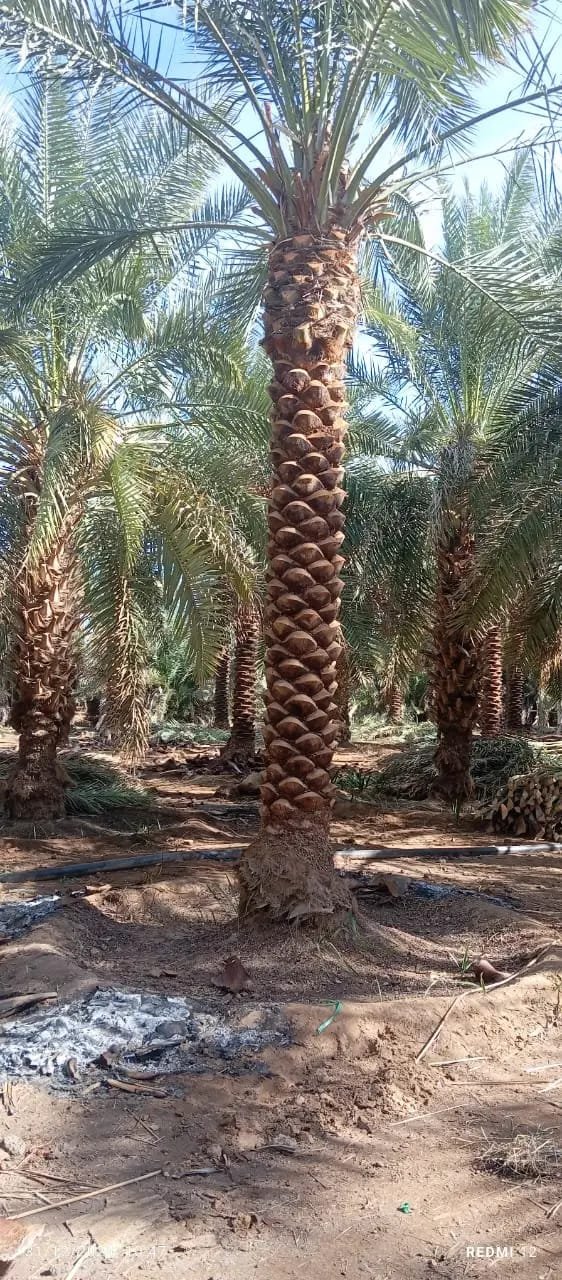
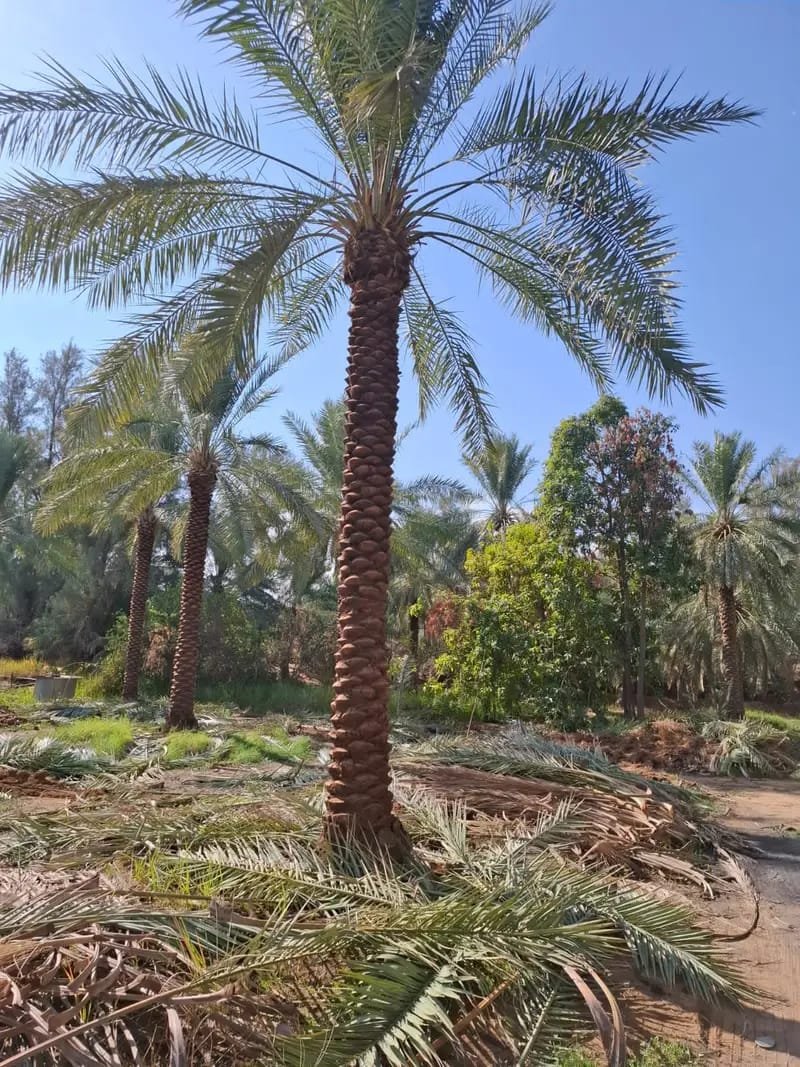
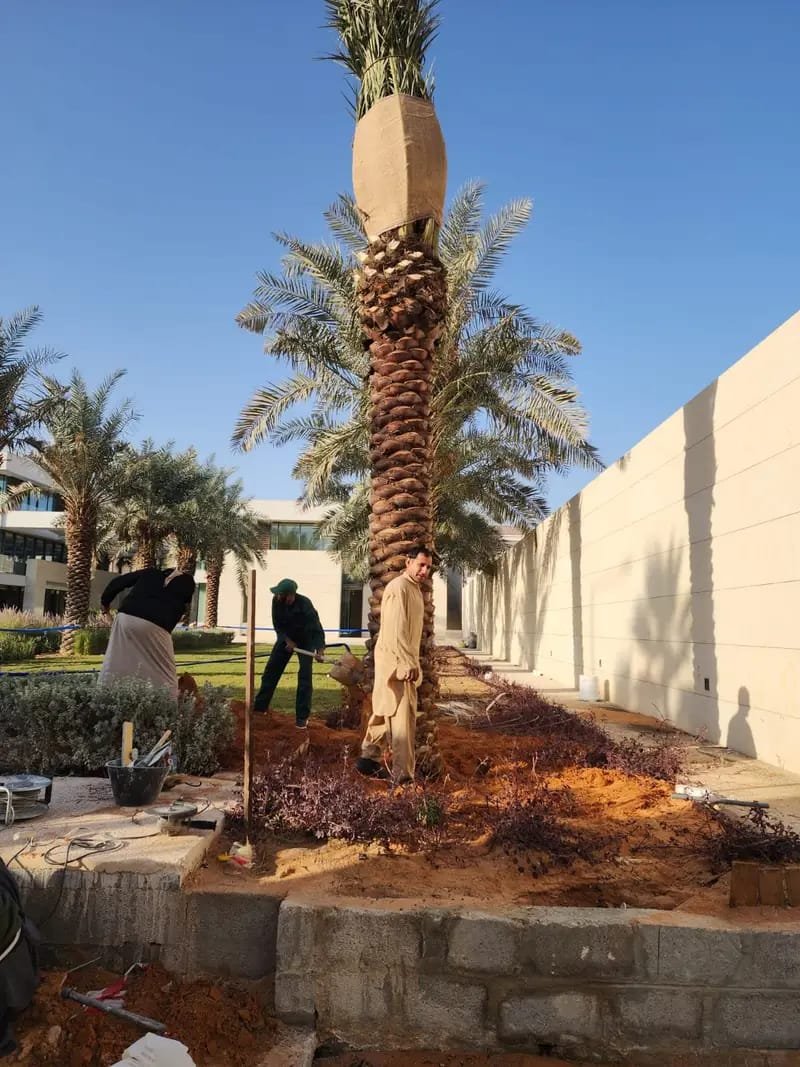
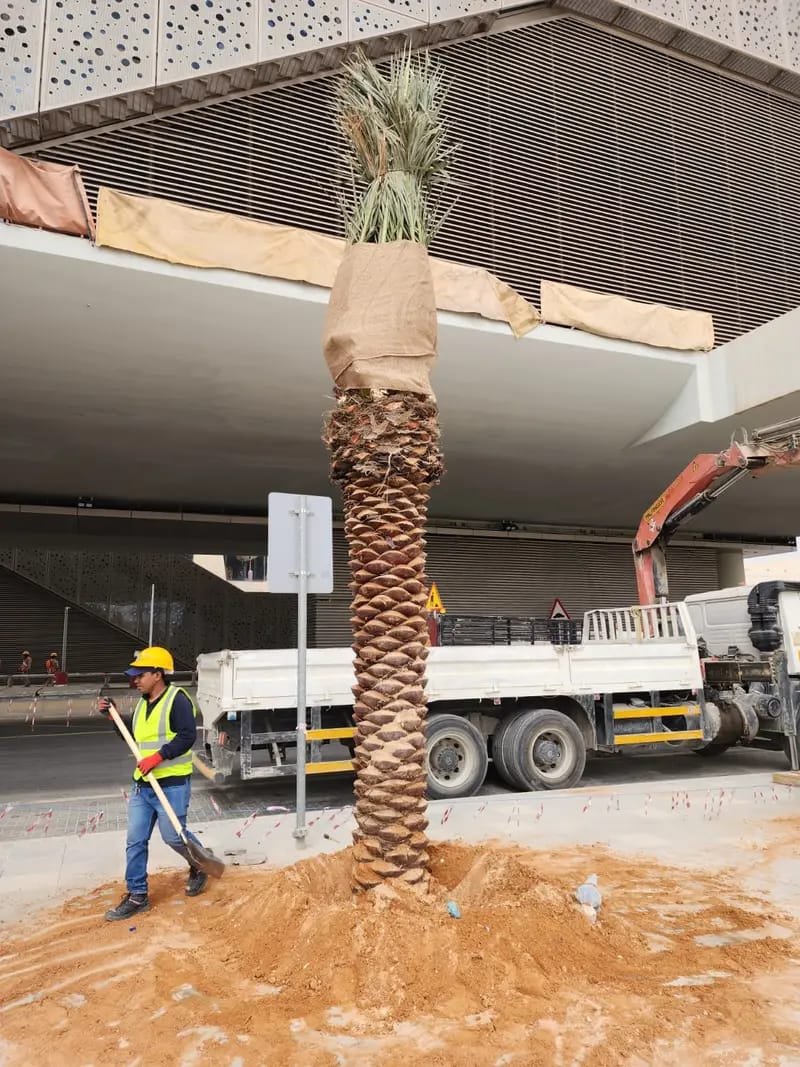
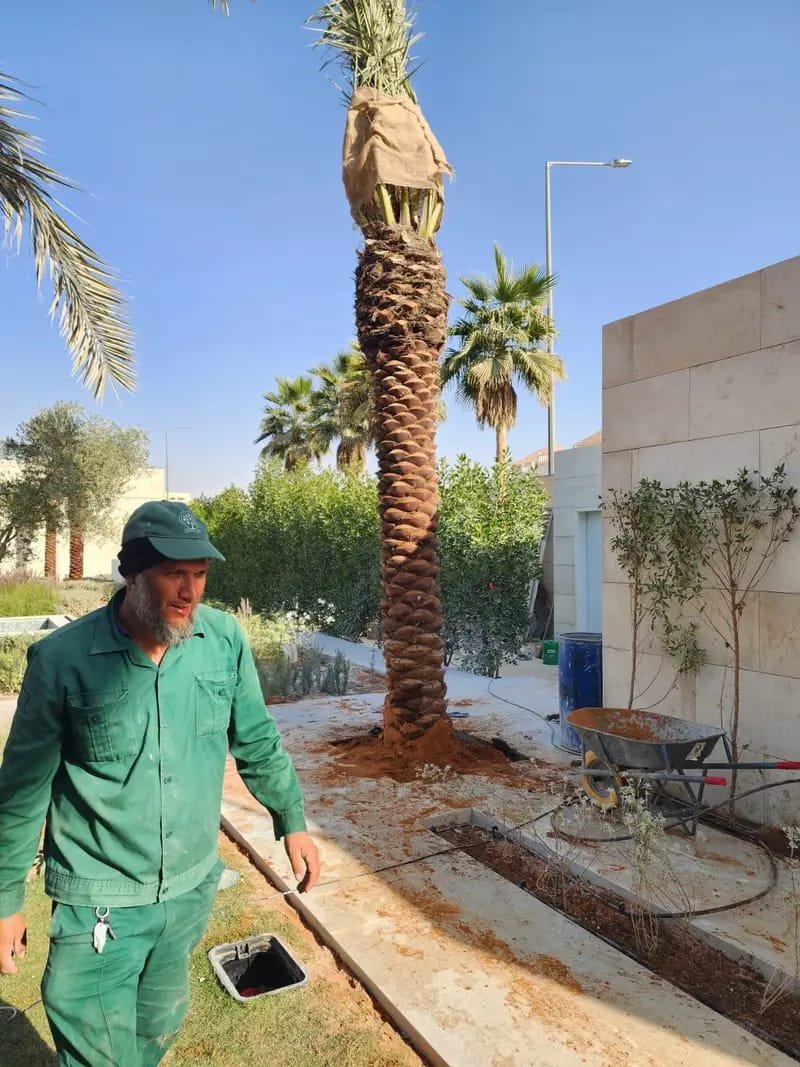
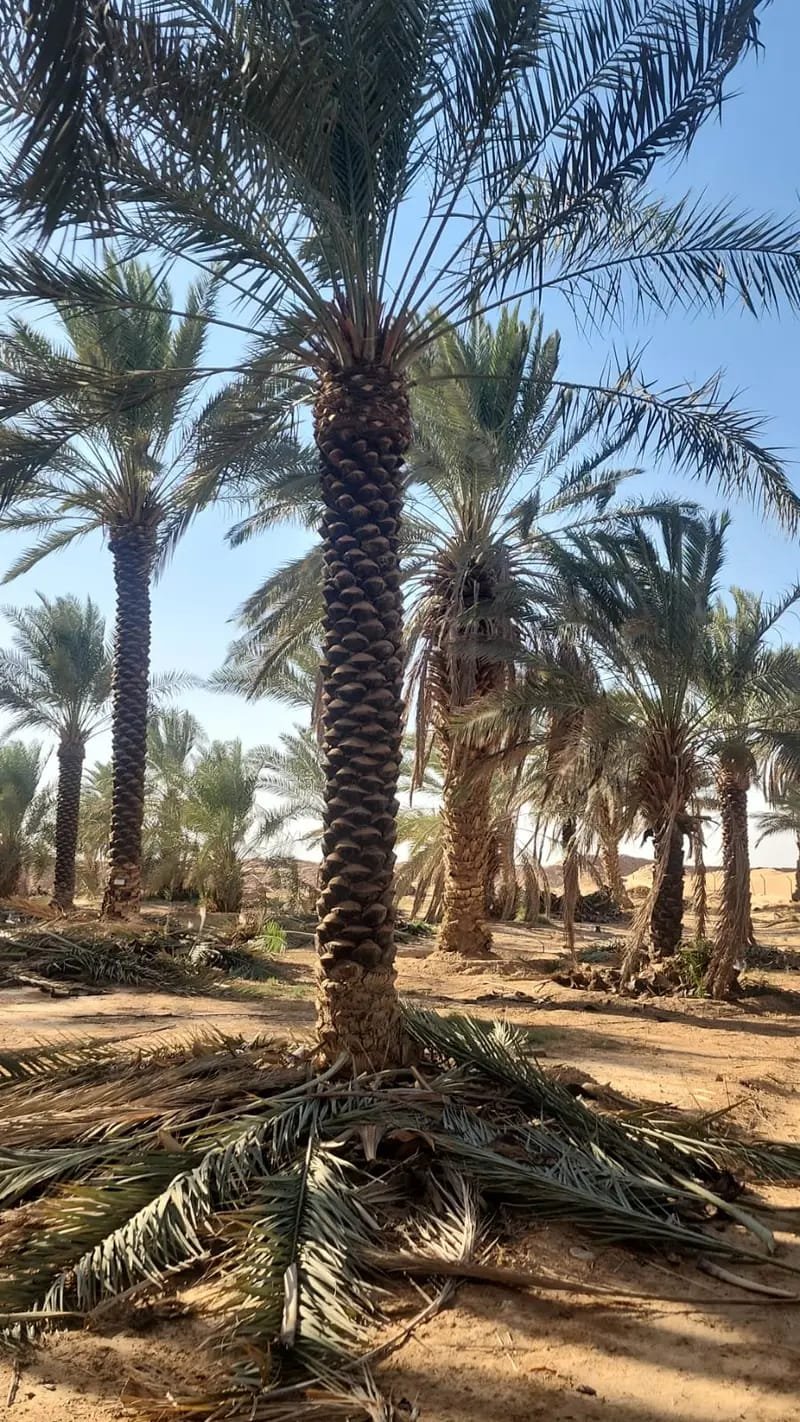
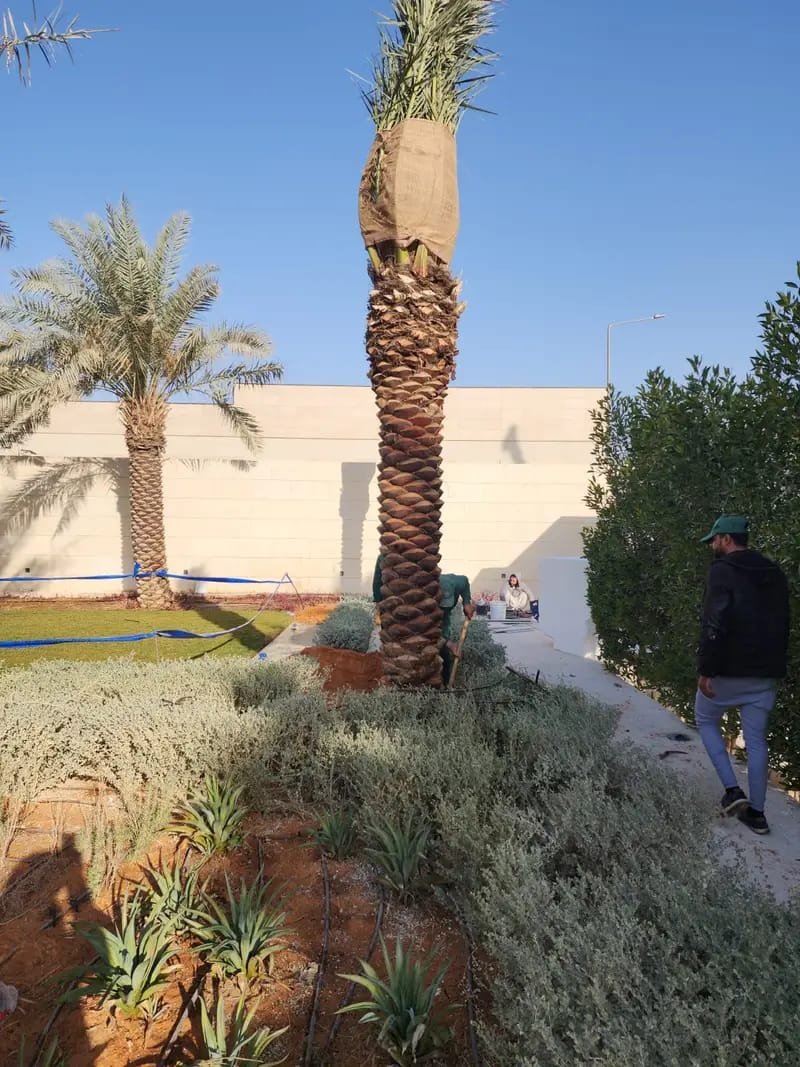
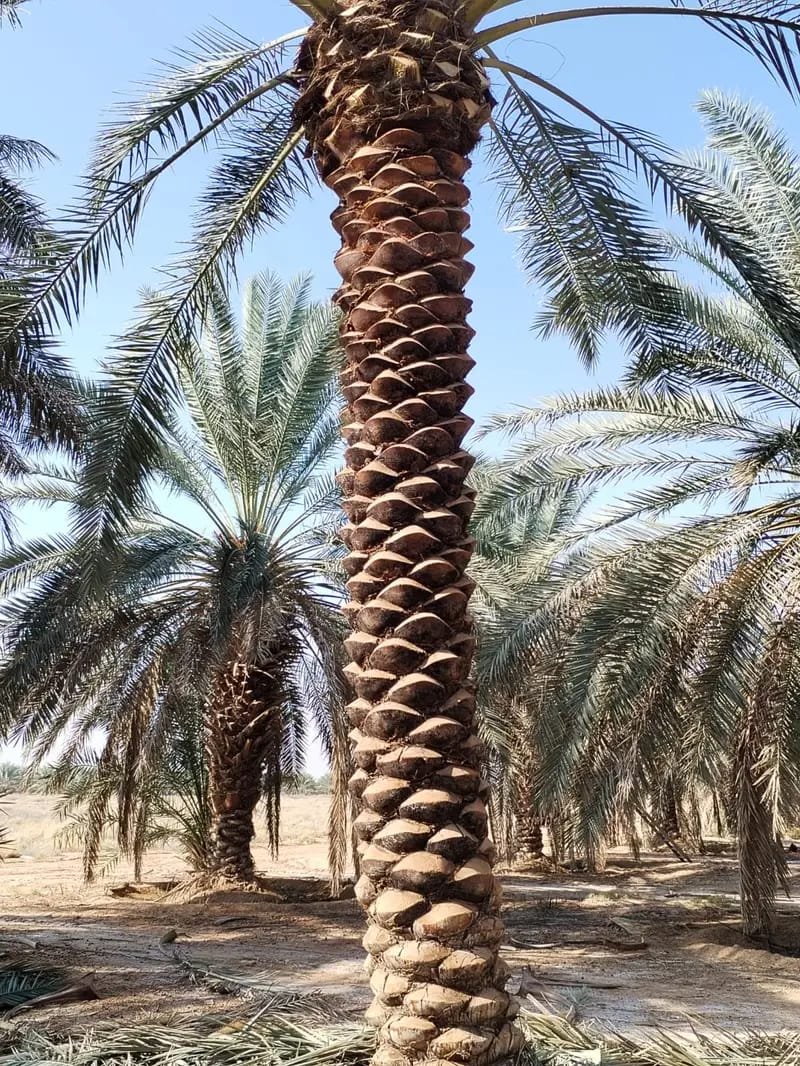
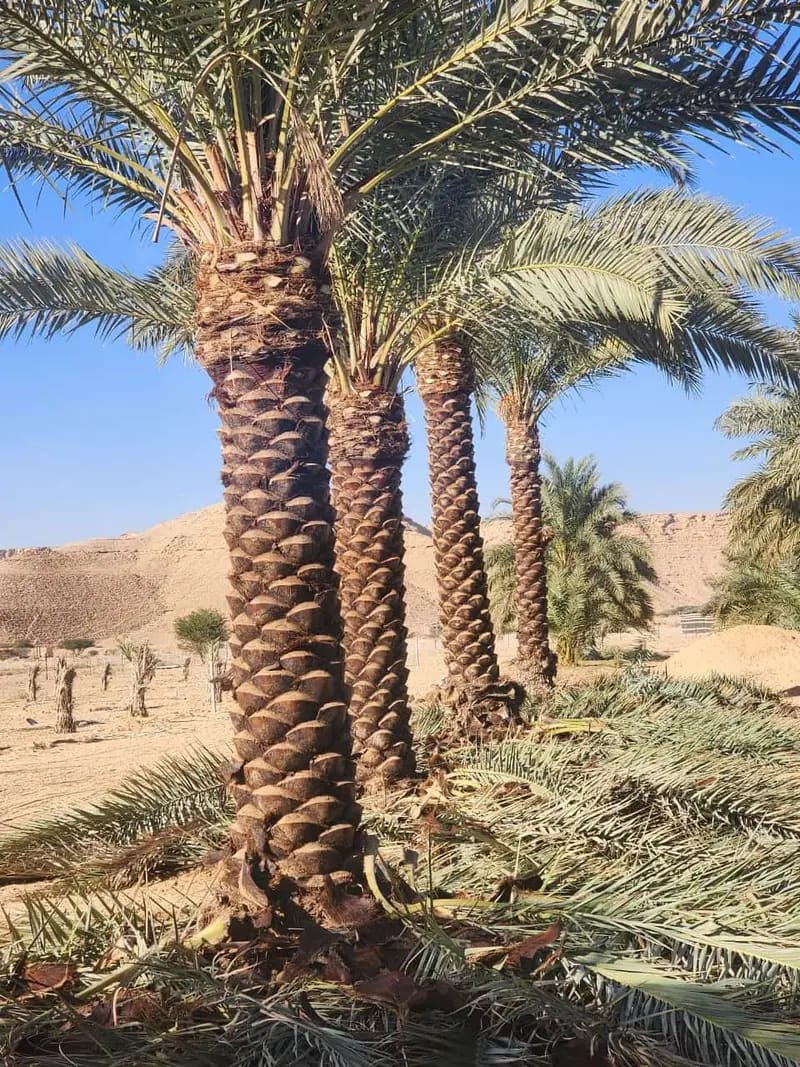
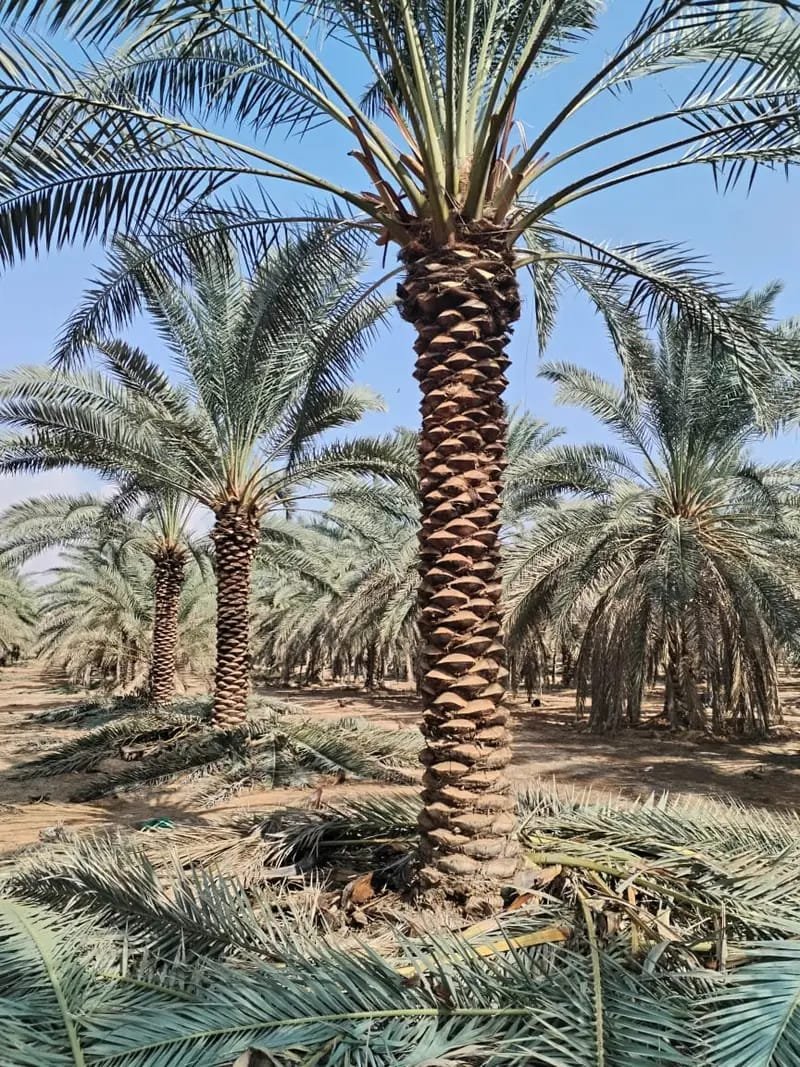
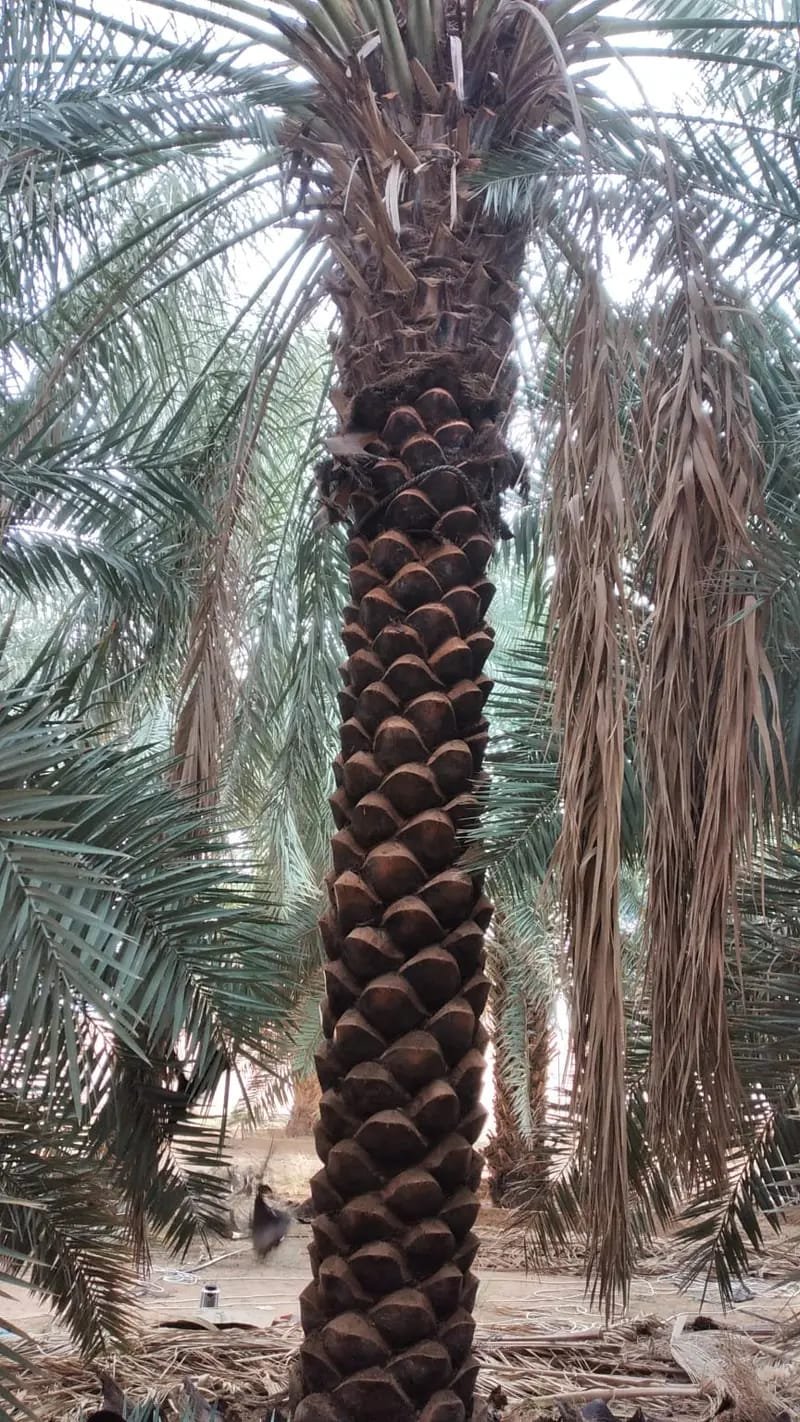
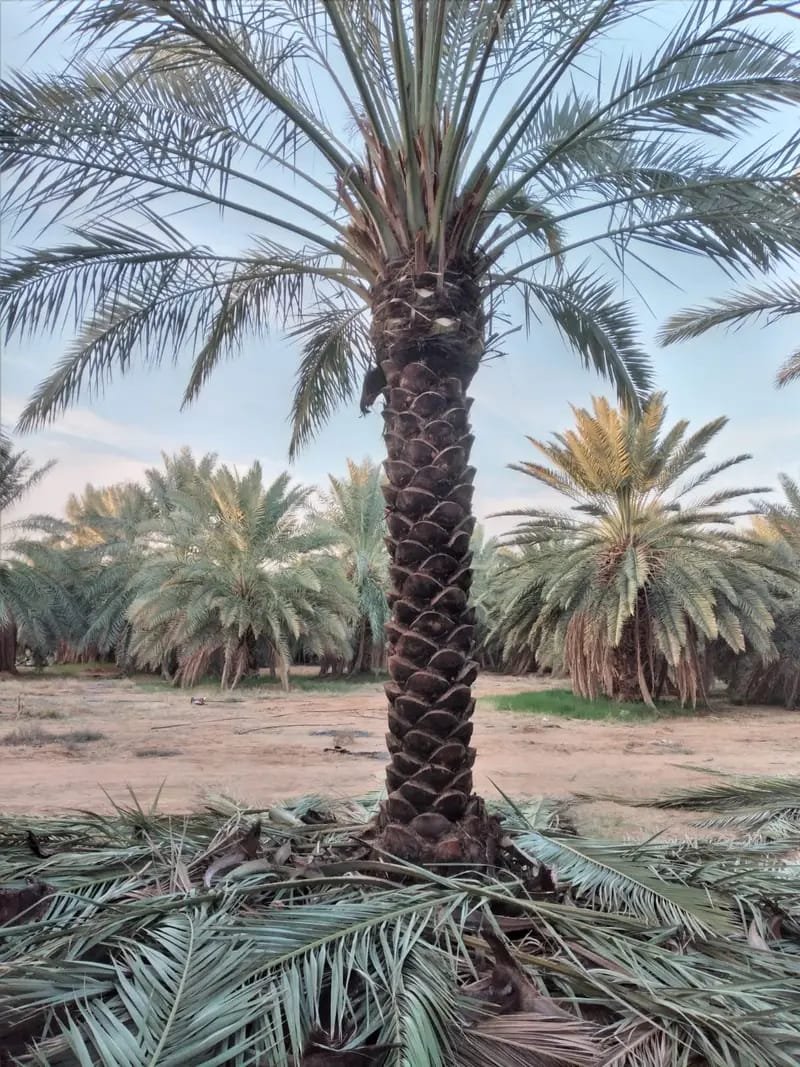
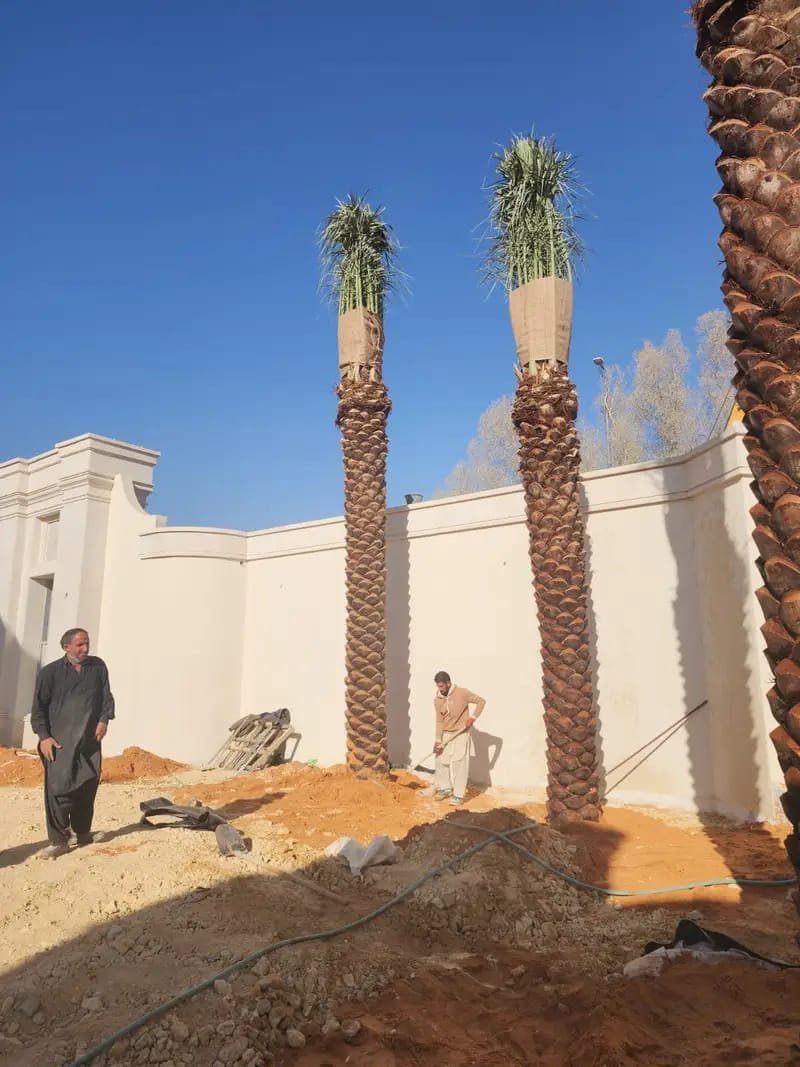
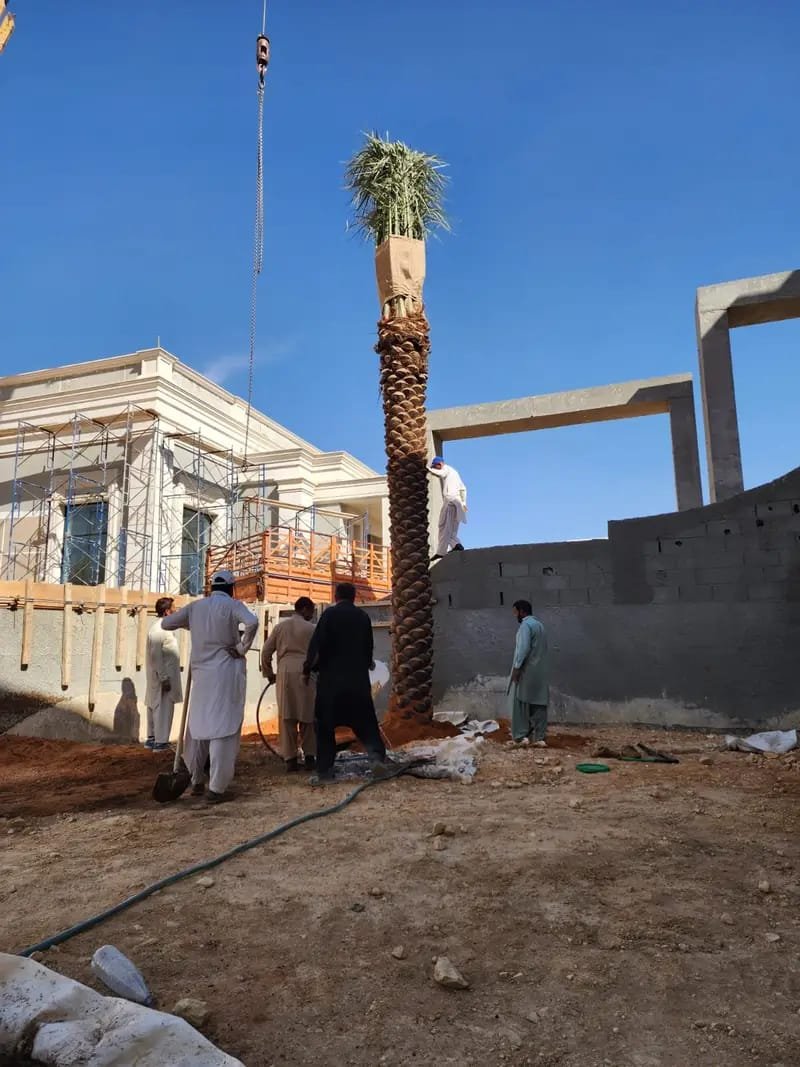
Trunk (Boards): Characterized by a strong, cylindrical trunk, rough to the touch due to the remnants of old frond bases that form a scale-like or "shield" protecting the tree. It grows to towering heights, sometimes reaching 30 meters, giving it a majestic and imposing presence.
Crown: The palm is crowned with a dense and majestic cluster of long, feathery fronds that extend like a green umbrella. The leaflets are arranged precisely and systematically, providing a visual balance that contrasts with the complex branches of other trees.
Beauty in the Details (Fruits)
The spathe and bunches: The journey begins with the appearance of the spathe (flower), which then transforms into golden, drooping bunches or clusters, each bearing dense clusters of dates.
Color palette: The fruit undergoes a stunning color journey; It begins as a vibrant green (the spathe), then turns bright yellow or deep red (the khalal or bisr stage), and finally ripens to a honey brown or dark brown (the tart and rutab stage), where the fruit becomes soft, sweet, and rich in nutrients.
Symbolism and Presence
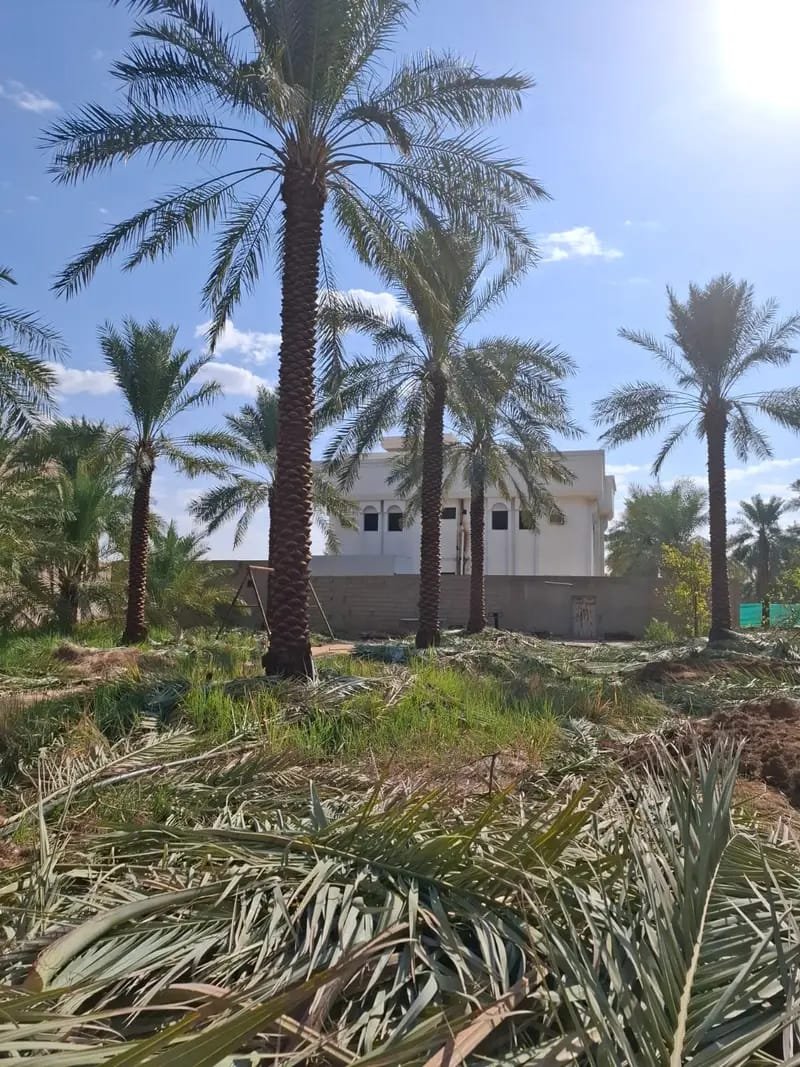
Resilience: The date palm is a living example of patience and endurance. It stands proudly amidst the harshness of the desert, its roots striking deep into the earth to draw life from its depths, and it withstands the salinity of the water and the scorching heat of the sun.
Limitless Giving: The date palm is described as "the aunt"; it gives generously. In addition to its nutritious fruit, which has been a staple food for Arabs throughout the ages, its fibers are used for ropes, its fronds for furniture and traditional houses, its trunk for construction, and its shade for protecting the creatures beneath it.
"The palm tree is the only tree that honors man as much as he honors it. It provides him with shade, food, fuel, and shelter, and its beauty increases the closer it gets to the sky."


 EN
EN